

March 26, 2026
Featured News
LTC Imperative Completes Surveys that Support Legislative Efforts
On March 26, 2026 by Jeff Bostic
Each year, The Long-Term Care Imperative conducts a Workforce and Financial Conditions survey to gauge key metrics for the aging services sector.
Our 2026 survey shows a slightly improved picture in terms of workforce and financial conditions, but we are aware that many clouds on the horizon make further progress in 2026 difficult at best.
Workforce Shortages
The survey shows that providers across the state continue to face serious workforce shortages, with nearly 11,750 open positions statewide, including more than 7,700 aide vacancies and over 1,300 RN openings. These shortages are not abstract workforce statistics—they are already restricting access to care. Today, 35 percent of Minnesota nursing homes have people on waiting lists, and facilities are unable to accept more than 13 admissions each month on average, often because they simply do not have enough staff to safely care for additional residents.
Financial Conditions
At the same time, financial stability across the sector remains fragile. More than one-quarter of nursing facilities and over half of assisted living providers have exhausted or never had financial reserves, and most lack access to credit, leaving providers with little ability to absorb rising costs or invest in staff and facilities.
Compounding these challenges, recent policy changes are forcing providers to make difficult financial tradeoffs that threaten both the quality and affordability of care. In response to operating rate caps and other financial constraints, more than 70 percent of nursing facilities are being forced to reduce wage growth for some staff, 65 percent anticipate cutting other costs that affect residents, and nearly 60 percent will delay needed investments to improve facility infrastructure.
At the same time, new wage mandates from the Nursing Home Workforce Standards Board are expected to significantly increase operating costs in assisted living, with about half of providers reporting they will need to raise private-pay rates for residents to cover these increases, while Elderly Waiver reimbursement will not rise to match those costs.
Hindering Affordability
These converging realities are already straining affordability and limiting access to care for Minnesota seniors—and without immediate legislative action, the situation will become significantly worse. The components of the Governor’s budget proposal announced last week would make the situation dramatically worse if adopted by the Legislature. Members are strongly encouraged to contact legislators to share their opposition to that budget proposal as well as sharing talking points from our survey that illustrate the challenges providers are already facing.
The LTC Imperative also recently compiled occupancy survey results for nursing homes for calendar year 2025. Those results show occupancy continuing to improve over time, with 4th quarter 2025 average occupancy the highest since before the pandemic. The improvement is not being experienced throughout the state though, as the metro area and a couple other regions (far northwest Minnesota and the St Cloud area) are showing particularly strong gains. Meanwhile average occupancy in most other areas, and particularly in northeast and southeast Minnesota, is well below the statewide average.
The Future of the Falls with Major Injury Quality Measure: What SNFs Need to Know
On March 26, 2026 by LeadingAge Minnesota
Falls with Major Injury (FMI) has long been one of the most closely watched quality measures in long-term care. It directly affects public reporting, survey scrutiny, and Five-Star Quality Ratings. However, a major shift is underway in how this measure is calculated.
CMS has released a respecified methodology that incorporates both Minimum Data Set (MDS) assessments and claims data, creating what is known as a hybrid quality measure. While this new methodology is already being implemented in some CMS programs, it has not yet been adopted in the Five-Star Quality Rating System.
Understanding what is changing—and when—will be critical for nursing homes preparing for the future of quality measurement.
Why CMS Is Changing the Measure
The primary reason for the re-specification is underreporting. Research reviewed by CMS found that a significant number of falls with major injury identified in hospital or emergency department claims were not being captured in MDS assessments. In fact, studies found that only about 57.5% of claims-identified fall injuries were reported in the MDS, indicating a substantial gap between clinical events and documented quality measure data.
To address this issue, CMS redesigned the measure so that fall-related injuries can be identified through multiple data sources, not just the MDS. This approach aims to provide a more accurate picture of actual resident outcomes.
What the Hybrid Measure Looks Like
The updated Falls with Major Injury measure uses a three-step identification process.
First, the traditional method remains in place. If a fall and major injury are documented on the MDS—specifically through Section J items indicating a fall and a major injury—the resident is included in the measure.
Second, CMS reviews claims data for injuries that occur after a fall recorded on the MDS. If a fall is documented in the assessment but the injury was not coded as major, CMS scans hospital, emergency department, or observation claims for diagnoses such as fractures or traumatic brain injuries. If these injuries appear in claims data, the event will still count in the measure.
Third, the measure can identify events entirely through claims data. If a hospital or emergency department claim contains both a fall external cause code and a qualifying major injury diagnosis code, the resident will be included in the numerator—even if the fall was never documented on the MDS.
This design makes the measure significantly more comprehensive and much harder to influence through documentation alone.
Expanded Definition of Major Injury
Another change in the respecified measure is the broader definition of what constitutes a major injury. CMS now includes a wide range of diagnoses such as traumatic fractures, joint dislocations, traumatic brain injuries, internal organ injuries, spinal cord injuries, crush injuries, and traumatic amputations. These are identified through ICD-10 diagnosis codes within claims data.
This expanded clinical definition further increases the likelihood that fall-related injuries will be captured through claims.
What Happens to the Rates
When CMS tested the hybrid methodology, the results showed a dramatic change in facility-level rates. Using MDS data alone, the average Falls with Major Injury rate was approximately 3.7%. When claims data were incorporated, the average rate increased to over 9%.
In addition, the percentage of facilities reporting zero fall injuries dropped significantly—from more than 11% of providers to less than 2%. This suggests that the hybrid methodology captures many events that previously went unreported in the MDS.
For providers, this means that future publicly reported rates may appear higher even if clinical performance remains the same.
When Will This Affect Five-Star?
At this time, the Five-Star Quality Rating System still uses the MDS-based version of the Falls with Major Injury measure. The hybrid methodology has been introduced within CMS technical specifications and Quality Reporting Programs but has not yet been formally adopted for the long-stay measure used in Five-Star.
CMS commonly introduces new measures first in reporting programs and testing environments before incorporating them into Care Compare or the Five-Star system. Based on past patterns, many experts anticipate that the hybrid falls measure could eventually transition into Five-Star in the coming years, although CMS has not announced a specific timeline.
What Nursing Homes Should Do Now
Even though the Five-Star measure has not yet transitioned to the hybrid model, facilities should begin preparing for the shift. Claims-based validation means that hospital and emergency department events will increasingly influence quality scores regardless of how they are documented on the MDS.
This places a greater emphasis on true fall prevention and clinical monitoring, rather than relying solely on documentation practices. Facilities should focus on strengthening fall risk assessments, environmental safety programs, interdisciplinary care planning, and post-fall review processes.
In addition, nursing homes should pay close attention to hospitalization and emergency department data, as these claims may soon play a much larger role in quality measurement.
Looking Ahead
The re-specification of the Falls with Major Injury measure represents a broader trend within CMS quality measurement strategy. Increasingly, CMS is moving toward claims-validated outcome measures that combine clinical documentation with real-world utilization data.
For skilled nursing facilities, this shift means that quality metrics will increasingly reflect actual resident outcomes across the continuum of care. Facilities that proactively strengthen clinical systems and fall prevention programs will be best positioned to succeed as these new measurement approaches evolve.
Supporting Multilingual Nursing Assistant Learners Without Lowering Standards
On March 26, 2026 by Anna Mowry
We’re hearing from providers across Minnesota about a shared challenge: strong, committed nursing assistant (CNAs) learners who struggle—not because they can’t do the work, but because training materials don’t fully support how they learn. That’s why OnTrack has expanded support for multilingual learners in CNA programs.
Maintaining Standards While Improving Outcomes
OnTrack’s multilingual learning supports are designed to address this challenge while keeping standards, instruction, and expectations fully intact. This approach aligns with how CNA competency is already assessed in Minnesota. Learners may take the written certification exam in Spanish, Somali, or Hmong, while the skills exam, where hands-on ability is demonstrated, remains in English.
OnTrack follows this same model:
- All live instruction remains in English
- All competency expectations remain unchanged
- Translated materials in Spanish, Somali, and Hmong are used to reinforce understanding
The goal is simple: help more learners fully grasp the material so they can meet and succeed within existing standards.
What’s Included
OnTrack now offers enhanced support for multilingual learners through:
- Learning Journals (textbook) in Spanish, Somali, and Hmong to reinforce comprehension alongside English instruction
- And supplemental translated resources, including:
- Introductory course
- Test preparation course
- Practice exams
Learners continue to receive standard English materials, with the option to add translated resources as a support tool.
Why Providers Are Using This Approach
Multilingual supports are not about making training easier. They are about making it more effective. Providers are using these tools to:
- Improve comprehension during training
- Increase learner confidence and engagement
- Strengthen test readiness
- Reduce early training drop-off and turnover
- Better support new nursing assistants as they transition into the workforce
Getting Started: What You Need to Know Eligibility
To order translated learner materials, sites must have an active, approved OnTrack Nursing Assistant Program.
- Active OnTrack programs: Enroll learners as usual. You will see the option to add translated materials at checkout. Available at no cost for a limited time thanks to funding from the MN DHS GEAR Division and the LeadingAge Minnesota Foundation.
- Not yet approved? Reach out to learn how to start training nursing assistant and medication aides through OnTrack’s programs.
To get started or learn more, contact Ontrack:
651-425-1110
ontracktrainingonline@gmail.com
Notable News
Excitement Around PockeTalk Translation Devices
On March 26, 2026 by Shelli Bakken
A recent visit to member site Our Lady of Peace Hospice (OLP) occurred on the day the team had gone through training on their recently deployed PockeTalk translation devices. These translation devices can deliver amazing results to teams in member settings.
These handheld Pocketalk translation devices can strengthen onboarding, training, daily communication, and sense of belonging for New American staff. By bridging language gaps, it boosts confidence for employees and enhances the overall care experience. These handheld, HIPAA-approved devices provide instant two-way translation in over 90 languages—helping your staff feel confident, connected, and set up for success from day one.
To say they were excited may be an understatement.
Supporting Employees
The intended outcomes have the clinical and operations teams so pleased to have been one of the provider sites who received these devices through the LeadingAge Minnesota Foundation.
- Improve onboarding for staff who are still building English proficiency
- Eliminate miscommunication in daily care tasks
- Boost confidence and retention for New American employees
- Improve safety with automatic translation of safety information.
Clinical leadership at Our Lady of Peace, Denise Borglund and Lindsey Pelletier, also believe there will be times when a resident could revert to a language they learned when younger and this could help staff understand resident requests.
Of the 90+ languages the PockeTalk devices can translate, one is a little-known language of Malayalam. This is a language spoken by the sisters who reside in the onsite convent space at OLP. The sisters also work as aides with those who reside at the hospice. This great resource will likely have a far reach in bringing meaningful and immediate language support to workforces and residents.
If you have stories on how this resource has impacted your community, we’d love to hear them.
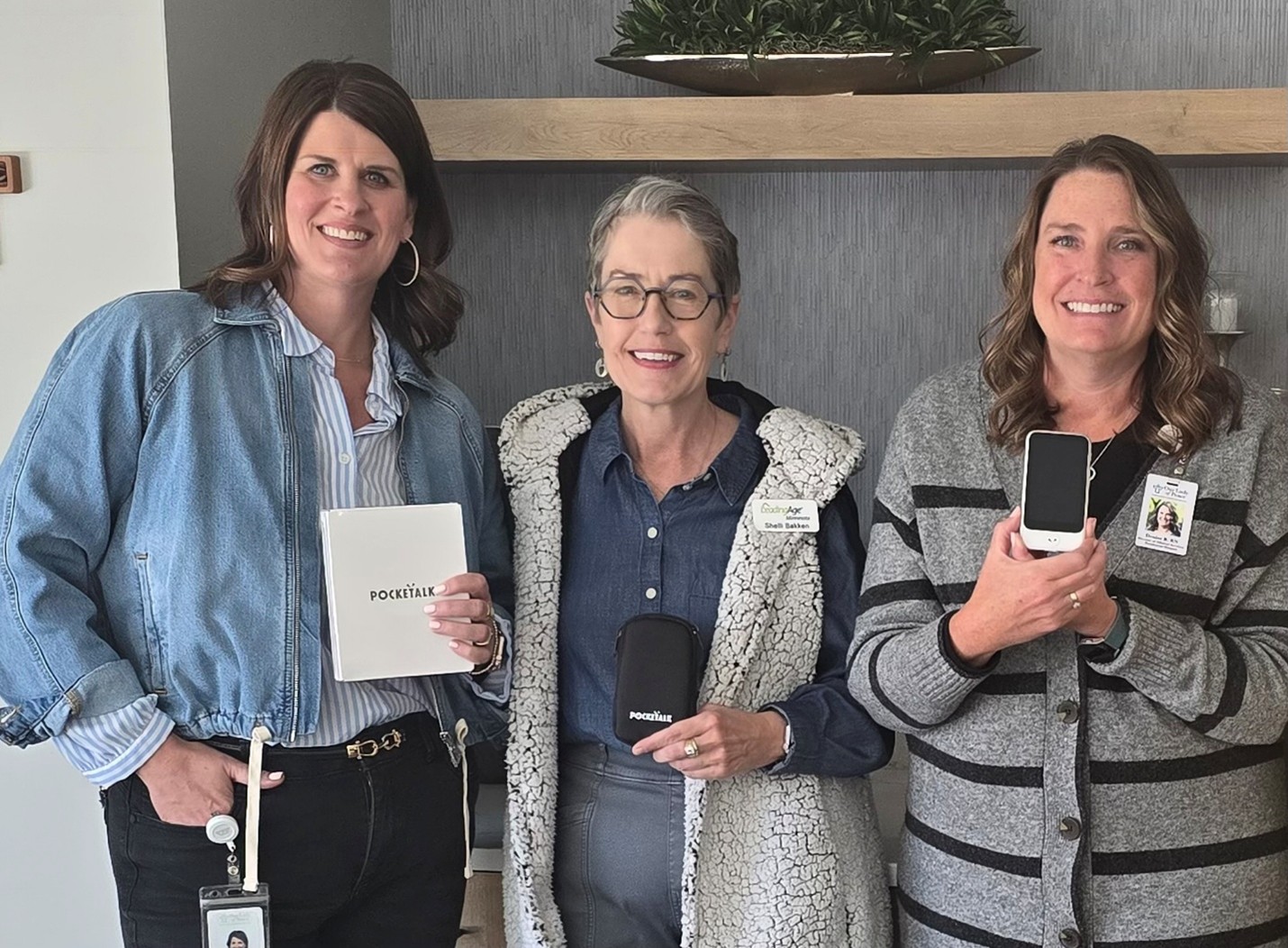
Denise Borglund, RN I Director of Clinical Services - Residential Hospice
Shelli Bakken | Director of Housing Policy and Expert Support
Lindsey Pelletier RN, CHPN I Director of Community Hospice and Home Health Care
Member News
Benedictine Names New Vice President, Clinical Operations
On March 26, 2026 by LeadingAge Minnesota
Brenda Brandl will join Benedictine as Vice President of Clinical Operations beginning April 13.
Brandl brings more than 25 years of compassionate leadership and hands‑on experience in long‑term care and senior living operations to her new position, where she will provide leadership and clinical direction throughout Benedictine’s 34 senior living campuses.
A strategic, mission‑driven professional with deep knowledge in regulatory compliance, budgeting, strategic planning and expense management, Brandl has built her career on strengthening clinical quality and supporting teams in delivering quality care. She will bring this experience as she leads the Benedictine clinical services group and serves on Benedictine committees as both a leader and a participant.
Brandl earned her nursing degree from Blackhawk Technical College, Wis.; a restorative nursing certificate from Lincoln Land College in Springfield, Ill., and a national certification in wound care through the Wound Care Education Institute in Plainfield, Ill.
“I am truly looking forward to joining Benedictine and building upon the strong foundation that has already been established,” Brandl said. “The work that has been done here is both meaningful, and impactful, and I am eager to help carry that forward while honoring the Mission and Core Values that guide Benedictine every day. I am grateful for this opportunity and excited for what lies ahead.”
“We look forward to the experience, leadership and heart Brenda will bring to our ministry,” added Anneliese Peterson, chief operating officer/senior vice president, operations.

Ziegler Announces Nancy Hooks as Catholic Elder Care and Post-Acute Specialist
On March 26, 2026 by LeadingAge Minnesota
Ziegler, a specialty investment bank, is pleased to announce the addition of Nancy Hooks as Catholic Elder Care and Post-Acute Specialist for the firm’s Senior Living Finance Practice.
Hooks joins Ziegler from LeadingAge National, where she served as Senior Vice President of Member and State Partnerships. During her 25-year tenure, she was the primary national liaison to 36 state partner associations representing 41 states. In this role, she built and sustained strong relationships with state association staff and board leadership, contributed to the development of both state and national strategic plans, supported executive leadership transitions, and led national recruitment and retention initiatives for LeadingAge members.
Prior to LeadingAge National, Hooks spent eight years with LeadingAge New York, where she focused on policy and advocacy related to housing and community-based services for older adults. Her expertise in senior housing led to her appointment as Co-Chair of the Congressional Commission on Affordable Housing and Health Care Needs of Seniors in the 21st Century, which produced a comprehensive report to Congress following its two-year convening.
“I’m thrilled to join Ziegler and continue supporting organizations that are committed to serving older adults and strengthening communities,” said Nancy Hooks. “Ziegler has a long-standing reputation in the senior living and faith-based sectors, and I look forward to collaborating with clients and partners to help them advance their missions.”
“It’s an honor to welcome Nancy to Ziegler following her distinguished career at LeadingAge and her longstanding dedication to the senior living sector,” said Dan Hermann, President and CEO of Ziegler. “We look forward to integrating Nancy’s deep sector knowledge and relationships into our team.”

United Properties Breaks Ground on New Facility in Corcoran
On March 26, 2026 by LeadingAge Minnesota
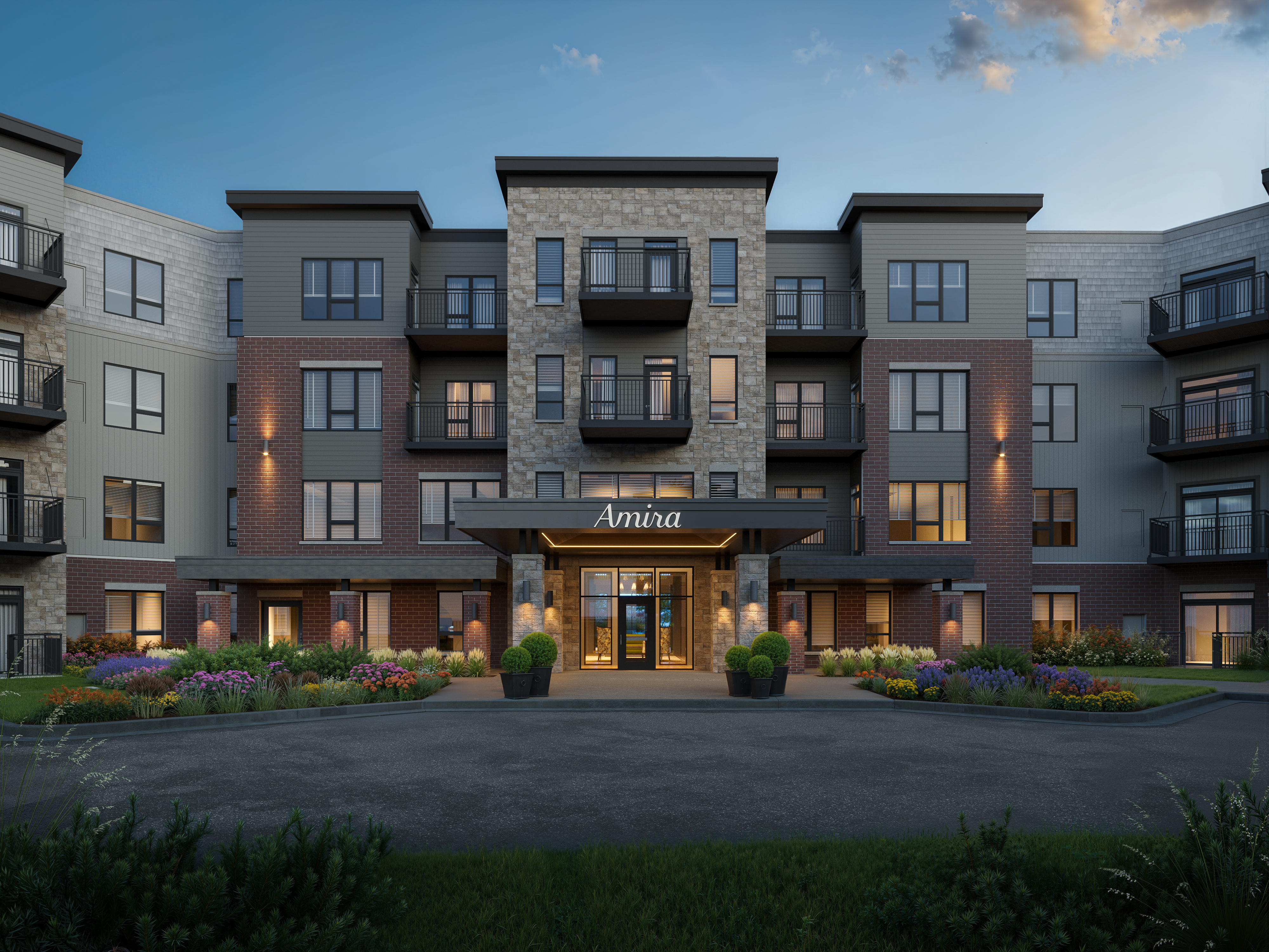
United Properties has broken ground on Amira Corcoran, a new 143-unit, 55-plus active adult rental community located at 7330 Brockton Lane N. in Corcoran, Minnesota. The four-story development expands the Amira senior living portfolio in the northwest Twin Cities metro and responds to growing demand for high-quality housing for older adults.
“Amira Corcoran reflects our long-term commitment to creating high-quality communities that respond to the evolving needs of older adults,” said Dave Young, vice president, senior living development, United Properties. “This project brings thoughtfully designed homes and meaningful amenities to a growing part of the Twin Cities, while reinforcing our focus on places that foster connection, independence and a strong sense of community.”
Amira Corcoran will offer studio, one-, two- and three-bedroom apartment homes designed for active adults, with amenities that promote connection, wellness and maintenance-free lifestyles. Planned amenities include a club room, fitness and yoga spaces, an arts and crafts studio, a state-of-the-art golf simulator lounge, secure parking, walking trails and an outdoor amenity patio with a pool and hot tub.
The community is located near Highway 101 and Bass Lake Road, providing convenient access to shopping, dining, health care and recreational amenities in Corcoran and neighboring Maple Grove. Construction is underway, with the first move-ins anticipated in summer 2027.
“Our goal is to create a community where residents feel at home, supported and connected,” said Stephen Pagh, executive vice president, Great Lakes Management.
“We’re proud to help bring Amira Corcoran to life and deliver a high-quality community for the Corcoran area,” said Barry Braithwaite, vice president, Eagle Building Company.
Project partners include architect Momentum Design Group, general contractor Eagle Building Company and property manager Great Lakes Management.
For more information, visit amiraliving.com.