Facebook Twitter RSS feed


April 2026

Featured News

From Insight to Impact: New Tools Are Empowering New Americans in Aging Services

With support from DHS’ GEAR Division and guidance from our Foundation’s Immigrant Voices and Employer Voices Advisory Councils, we’ve transformed lived experiences into powerful resources that open and strengthen pathways for New Americans to pursue and advance in aging services careers.

Multilingual Aging Services Audio Glossary

Our new audio glossary, available in four languages—English, Hmong, Somali, and Spanish—­­is grounded in evidence-based language acquisition practices and includes over 185 common acronyms and terms used in aging services. It is designed to empower New Americans as they acclimate to the field’s unique terminology, helping them build confidence and better navigate what can often feel like an overwhelming number of unfamiliar terms. The impact of the audio glossary is reflected in its 3,170 views within the first few months.

Click here to explore this new resource.

Multilingual Video Series

Minnesota’s immigrant communities deserve clear, culturally relevant information about careers that offer purpose, stability, and opportunity, and this multilingual video series showcases how aging services offers all three. Available in English, French, Hmong, Oromo, Spanish, Somali, Swahili, and Ukrainian, this video series features New Americans in a variety of aging services careers, told through five documentary-style videos:

In just its first few months, our multilingual video series has reached more than 250,000 views, demonstrating a clear demand for culturally relevant, linguistically accessible information about careers in aging services.

Imagined and designed by our Foundation’s Immigrant Voices Advisory Council members, and produced by Captivate Media & Consulting, these videos provide a powerful resource for recruiting, onboarding, and advancing Minnesota’s New American talent in aging services careers.

Dive into the full series here to learn more.

New American Map of Resources

With more than 250 Minnesota-based resources in one place, our interactive Map of Resources connects users to essential services—from training to community support—all in one place. Designed as a go-to navigation tool, it has already been viewed over 800 times, helping employers and caregivers find what they need, faster. This map is more than a directory—it’s a bridge, connecting New Americans with an ecosystem of supportive services, as they establish roots and thrive in Minnesota.

Together, these tools are making an exciting impact as bridges to opportunities, belonging, and a stronger care workforce for Minnesota.

Notable News

Supporting Caregivers, Strengthening Care

Caregivers are the backbone of aging services in Minnesota. Every day, they provide essential support that allows older adults to live with dignity, safety, and connection. Their work is constant—and critical.

But in times of uncertainty, even the most committed workforce faces challenges that extend far beyond the workplace.

This spring, the LeadingAge Minnesota Foundation awarded 17 grants totaling $425,000 through the Caregiver Support in Times of Uncertainty initiative. While the funding is important, what matters most is the reason behind it: supporting caregivers as people—so they can feel safe, stable, and able to continue the work they care deeply about. When caregivers are supported in their daily lives, they are better able to show up for the people and communities who rely on them.

Across the state, providers are navigating conditions that feel both urgent and familiar—echoing the early days of COVID-19, when circumstances were rapidly changing, fear and uncertainty were high, and providers were asked to continue delivering essential care under extraordinary strain. These pressures don’t stay contained within organizations; they ripple outward, affecting families, communities, and the broader system of care.

It is also important to recognize that long-term care is one of the most highly regulated sectors in the country. Providers operate under strict federal and state requirements related to employment eligibility, licensing, and compliance. The caregiving workforce in these settings is legally authorized to work—individuals who have gone through appropriate processes to live and work in the United States. Despite this, broader uncertainty and changing conditions can still create fear and disruption that affect employees’ sense of safety and stability.

Providers shared what this looks like in real terms:

  • Caregivers changing routes, traveling longer distances, or incurring higher transportation costs to feel safe getting to and from work
  • Staff adjusting schedules or relocating—sometimes across state lines—to reduce risk and uncertainty
  • Employees reporting being followed after shifts or taking precautions to avoid being seen during commutes
  • Increased absences tied directly to fear and safety concerns, with some organizations seeing sharp spikes in missed shifts
  • Workforce losses that significantly strain operations, with some sites losing substantial portions of their caregiving staff
  • Leaders stepping in with hands-on support—coordinating transportation or personally driving staff—to ensure care continues

These challenges are not theoretical. They directly impact whether care is available, consistent, and sustainable.

Meeting Needs in Practical, Human Ways

The Foundation designed this initiative with a simple premise: the people closest to the work are best positioned to identify what support is needed.

Rather than a one-size-fits-all approach, the grants we’re awarding support flexible, locally driven solutions that reflect the realities caregivers face every day. Across funded efforts, common themes emerged—approaches that are practical, widely supported, and centered on helping people stay safe, stable, and able to work:

  • Expanding access to mental health support through employee assistance programs, on-site services, and virtual care options at no cost to staff
  • Strengthening real-time communication and safety through tools like mass notification systems and emergency alerts
  • Providing short-term stabilization support, including help with groceries, transportation, utilities, and housing to reduce immediate financial stress
  • Enhancing building security and emergency preparedness to create safer work environments
  • Creating on-site supports, such as food shelves or resource hubs, that help meet everyday needs and reduce barriers to coming to work

These are straightforward investments in people. They reflect a shared understanding across sectors: when caregivers are supported, the entire care system is stronger.

A Shared Interest Across Communities

Minnesota’s aging services sector is at a pivotal moment. Demand for care continues to grow, while workforce challenges persist, with thousands of open caregiving positions statewide. Addressing this gap requires more than recruitment—it requires retaining and supporting the workforce we already have. When retention is unstable, new hires simply replace those leaving, making it difficult to build the workforce needed to meet growing demand.

This is where partnership matters.

  • For providers, it means listening closely to staff and responding quickly.
  • For philanthropic partners, it means investing in flexible solutions that meet real-time needs.
  • For the broader community, it means recognizing the essential role every kind of caregiver plays in the health and wellbeing of us all.

Supporting caregivers is not a partisan issue—it is a practical one. It is about stability, continuity, and ensuring that older adults across Minnesota continue to receive the care they need.

Looking Forward

The Caregiver Support in Times of Uncertainty grants are designed to address immediate challenges. But they also point to something bigger: the value of responsive, community-informed solutions that can be mobilized when the workforce—and the people it serves—need support most.

At its core, this work reflects a simple idea that resonates across perspectives: when we support caregivers, we strengthen care.

And when care is strong, communities are stronger too.

Building Workforce Pathways: OnTrack Innovations for Career Growth and Multilingual Learners

In the first months of 2026, the LeadingAge Minnesota Foundation expanded its OnTrack training programs with new innovations designed to strengthen the aging services workforce.

Building on a model that has trained more than 10,000 nursing assistants, these efforts now support career advancement for a new career track—Trained Medication Aides (TMAs)—and also improve training outcomes for multilingual Nursing Assistant (CNA) learners across Minnesota. As implementation begins, early interest from providers and partners signals strong potential for broader impact.

Expanding Career Pathways with TMA Training

Earlier this year, OnTrack introduced a new Trained Medication Aide (TMA) training program, approved by the Minnesota Department of Health. This hybrid model combines online and in-person learning to create a flexible pathway for caregivers to advance their careers while helping organizations meet growing workforce needs.

Developed in response to provider and workforce partner feedback, the TMA program is already being adopted by organizations seeking accessible, scalable training solutions.

This model also creates opportunities beyond traditional providers. Community-based organizations (CBOs), workforce agencies, and regional collaboratives can partner with employers or establish training programs themselves to expand access to career pathways.

Strengthening Outcomes for Multilingual Learners

OnTrack has also expanded support for multilingual learners in Nursing Assistant (CNA) programs, addressing a key barrier facing many capable individuals entering the field.

To better support learners whose first language is not English, OnTrack now offers key training materials in Spanish, Somali, and Hmong, alongside standard English instruction.

This approach maintains all existing standards while improving how learners engage with the material:

  • All instruction and competency expectations remain in English
  • Skills assessments reflect real-world care environments
  • Translated Learning Journals and supplemental resources in Spanish, Somali, and Hmong reinforce comprehension

Additional supports, including translated practice exams and introductory and test preparation materials, help learners build confidence, strengthen understanding, and succeed within the same expectations.

A Growing Opportunity for Partnership

These innovations represent scalable, field-tested solutions to workforce challenges across Minnesota. For funders, community-based organzations, and workforce partners, they offer ways to:

  • Expand access to healthcare career pathways
  • Support multilingual learners, including Spanish-, Somali-, and Hmong-speaking individuals
  • Strengthen regional workforce pipelines through partnership models
  • Invest in approaches that maintain high standards while improving outcomes

With support from the Minnesota Department of Human Services GEAR Division and the LeadingAge Minnesota Foundation, multilingual training materials are available at no cost for a limited time.

Get Involved

As these new models and innovations gain traction, there is a timely opportunity to expand workforce development efforts. Community-based organizations, workforce partners, and employers interested in launching or participating in an OnTrack program are encouraged to connect.

To explore starting a program or partnering with OnTrack:

Stronger Connections, Healthier Communities

What if the key to healthy longevity wasn’t just healthcare—but stronger community connections?

Across rural Minnesota, communities are proving that when local organizations, healthcare providers, and neighbors work together, older adults can stay healthier, more independent, and more connected.

The LeadingAge Minnesota Foundation’s Connected Communities for Healthy Aging initiative is helping communities build the partnerships and systems needed to support aging well—right where people live.

Through Connected Communities, local coalitions are strengthening the “connective tissue” of their communities—linking healthcare, social services, and community resources so older adults can more easily access the support they need.

Comfort and Support for Aging Adults

75-year-old Vickey Mann recently began facing some new health concerns and now stays home during the day while her husband goes to work. As a result, she found herself worrying more about her safety and independence.

Through the Connected Community of Freeborn County, Vickey was introduced to an innovative virtual home care program designed to support older adults living independently. Zemplee, an AI-powered monitoring system and wellness platform, tracks her daily movements and vital health signs. It can also check in with questions and provide guidance when needed.

The technology offers gentle monitoring and alerts if something seems unusual—but for Vickey, the greatest benefit is the peace of mind it brings.

“I just like the comfort of it. I’m calm and secure with it. That’s the biggest thing.”

Vickey has been able to stay in her home of 28 years, doing the things she loves and going about her life as usual. It gives her peace of mind and a sense of safety. Stories like Vickey’s illustrate what Connected Communities is all about: helping older adults stay safe, maintain their independence, and remain supported and connected in the communities they call home.

See Vickey’s whole story in the StarTribune.

Why This Work Matters

As our population ages, communities across the state are confronting a growing challenge: how to ensure older adults can remain healthy, connected, and supported where they live. The Minnesota Department of Health’s Longevity: Recommendations to Reduce Social Isolation and Enhance Social Connection in Rural Minnesota report highlights social isolation as a significant public health concern for older adults—one that affects health outcomes, quality of life, and the long-term vitality of rural communities.

The report emphasizes that improving longevity and wellbeing requires more than healthcare services alone. It calls for community-based solutions that strengthen social connection, support continued engagement in community life, and build local infrastructure that helps people age well.

Connected Communities is highlighted in the report as an example of this kind of approach. By bringing together aging services providers, community partners, and local leaders, the initiative helps communities design solutions that address the social, economic, and health factors that shape how people age. These partnerships create new opportunities for older adults to remain connected to their neighbors, their communities, and the services they need to thrive.

At its core, Connected Communities recognizes that healthy aging happens in community. When communities intentionally build systems that support connection, belonging, and care, they not only improve the lives of older adults—they strengthen the long-term resilience and vitality of the entire region.

Connected Communities 2025 Impact At A Glance

All data for two legacy pilot sites unless otherwise noted. Impact data for all five pilots expected by the end of 2026.

8,944 people supported
Older adults and caregivers connected to services, programs, and care coordination.

$1.47 million in estimated health care savings
Through improved prevention, care coordination, and reduced emergency utilization.

668 community partnerships built*
Healthcare providers, nonprofits, local governments, businesses, and volunteers working together.

4,485 people engaged in social connection and mental wellbeing programs
Helping reduce isolation and strengthen community engagement.

*Across all five pilot sites

A Model for the Future of Healthy Longevity

As Minnesota continues exploring strategies to support healthy longevity, the lessons from Connected Communities are clear.

When communities work together—sharing resources, building partnerships, and centering the needs of older adults—they can improve health, strengthen local economies, and create places where people can thrive at every stage of life.

Connected Communities is showing that stronger connections lead to healthier communities.

Institute Showcases Foundation and Breaks Fundraising Record

LeadingAge Minnesota’s annual Institute & Expo brings together over 4,000 people to learn, be inspired, network, and celebrate caregivers. This year’s event, held February 10-12, did not disappoint!

A central feature of the 2026 Institute was a showcase of the work of the LeadingAge Minnesota Foundation (LAMF). This included two concurrent sessions highlighting grant funded activities. Foundation Director Gina DiMaggio facilitated a panel discussion of our Connected Communities pilots as they shared their experience in developing new ways to support seniors in their homes and communities and the promising outcomes they have achieved to date.
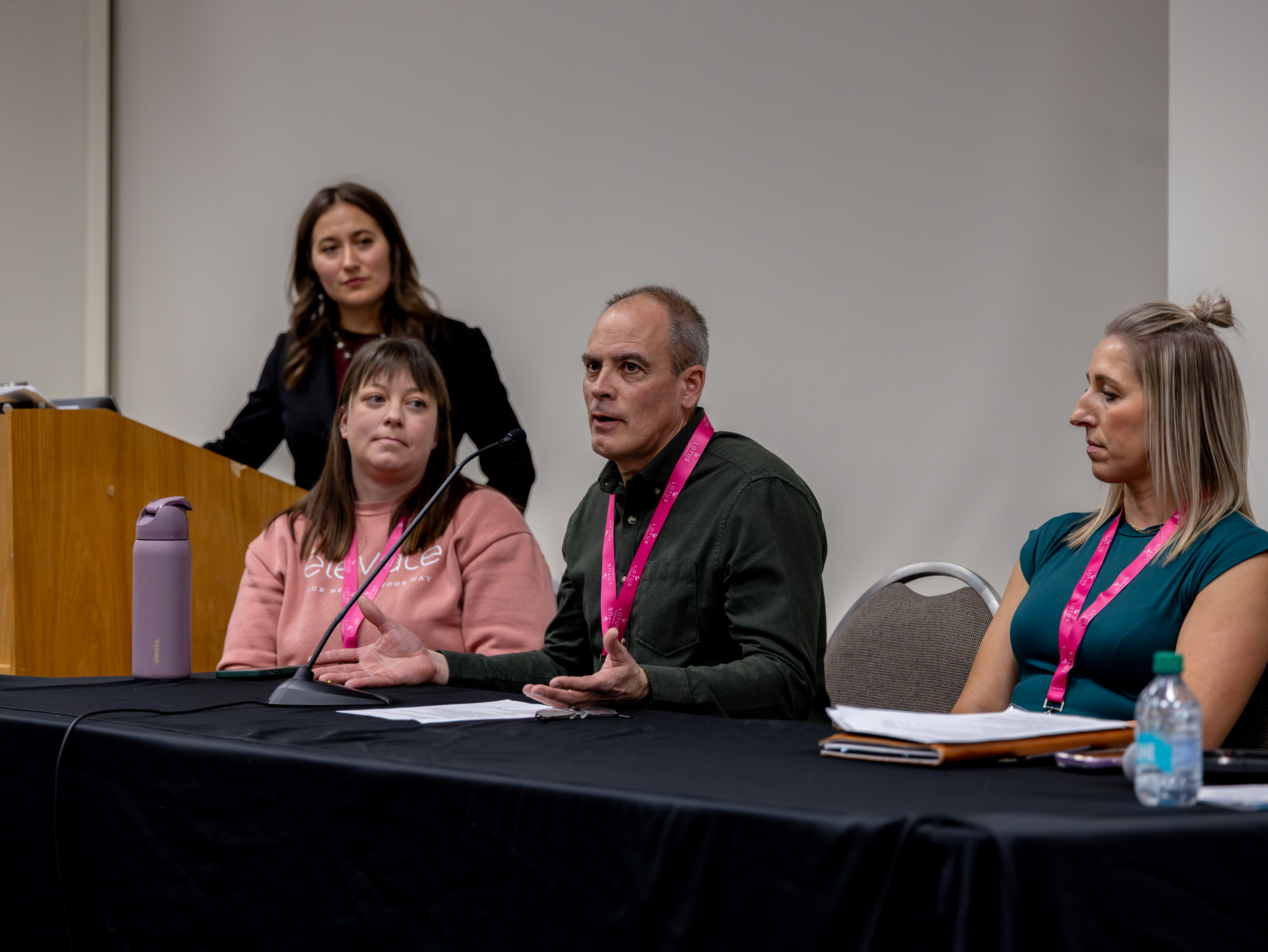
Kirstan Ketter, Project Manager, shined a spotlight on how we can better support New Americans as they seek to enter and excel in the senior care field, and shared the many resources developed by LAMF as part of our New Americans in Long-Term Care Grant.
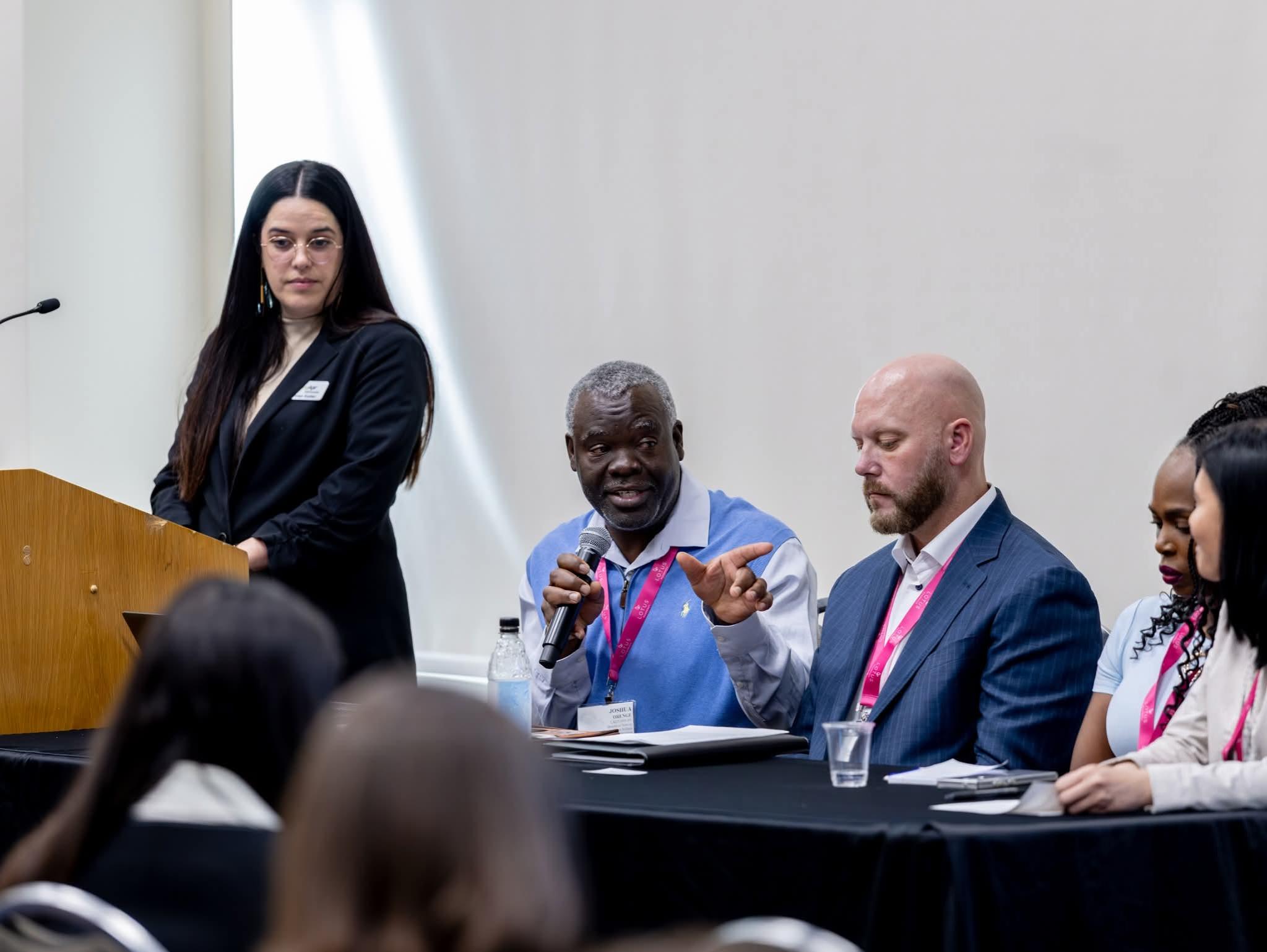
 

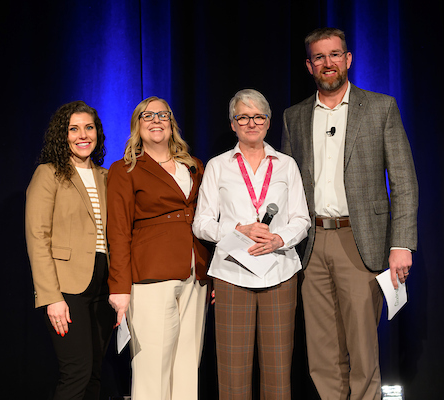
The Foundation’s 10th Annual Silent Auction raised more funds than any previous year! Ring toss and other carnival games were new this year to add to the fun and the fundraising. All proceeds go to the Gayle Kvenvold Commitment to Caregivers Fund, which provides financial support to our outstanding caregivers who sacrifice so much to do the work they are called to do. This includes Annette Riestenberg, from Perham Living, who received LeadingAge Minnesota’s Caregiver of the Year Award—the highest honor we bestow. Special thanks to all those who donated or bid on Silent Auction items, and to our volunteers who helped with carnival games!
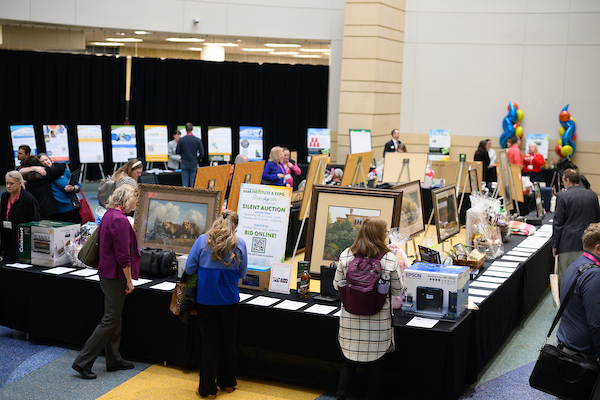
A Poster Walk provided another way for Institute attendees to learn more about the LeadingAge Minnesota Foundation and access information on our scholarships, resources, grants, pilot and research projects, and more.

LeadingAge Minnesota’s 2026 Caregiver of the Year

For more than 35 years, LeadingAge Minnesota has celebrated excellence through the Stars Among Us Awards, with the Caregiver of the Year Award standing as the highest honor. The award recognizes caregivers whose compassion, skill, and dedication profoundly improve the lives of older adults, families, and communities.

To further honor these extraordinary professionals, the LeadingAge Minnesota Foundation established the Gayle Kvenvold Commitment to Caregivers Fund three years ago. Named for former CEO Gayle Kvenvold—whose own journey in aging services began as a CNA in Albert Lea—the fund provides a monetary gift to each Caregiver of the Year recipient in recognition of their exceptional commitment to care.

This year’s statewide Caregiver of the Year is Annette Riestenberg, RN, of Perham Living. For nearly 40 years, Annette has been known for pairing clinical excellence with deep compassion. She has a remarkable ability to see the whole person behind each diagnosis, honoring residents’ histories, identities, and dignity while supporting them through illness, cognitive decline, and the final stages of life.

Families often describe Annette as a steady, reassuring presence during some of their most difficult moments. Colleagues see her as a mentor and role model who leads by example, reminding those around her that great caregiving is rooted not only in skill, but in humanity.

Through the Foundation’s support, this award continues to recognize caregivers like Annette whose dedication leaves a lasting impact on the people and communities they serve.

Tee Up for a Great Cause!

Get ready to hit the greens for something bigger than the game. Join us on Aug. 4 for the 13th Annual LeadingAge Minnesota Foundation Golf Tournament at beautiful Prestwick Golf Club in Woodbury!

Your day on the course helps drive real impact—supporting caregiver scholarships, strengthening governance resources, and fueling innovation across our field.

Whether you're swinging for fun or networking with purpose, this is a can’t-miss summer event.

  • Sponsor deadline: June 24
  • Golfer registration opens: Late April

Learn more and get involved.

Questions? Reach out to Jenny Prosser at jprosser@leadingagemn.org.

AgingServicesJobs.org
Find/post open positions serving older adults in Minnesota.